
Custom mobile app development for iOS and Android
We build mobile apps for customers, partners and employees. By connecting your app to your online store, CRM or ERP, we help people place orders, make bookings and access up-to-date information from their phones.
We start with your goals and core features, then plan the design, development, integrations and support around your project.
You do not need a technical brief to get started. Tell us what you want to improve.
- Building software since 2011
- UX/UI, development and QA in one team
- ISO/IEC 27001:2022 certified
Mobile apps we have worked on
Explore the business challenges, features and integrations behind our projects.
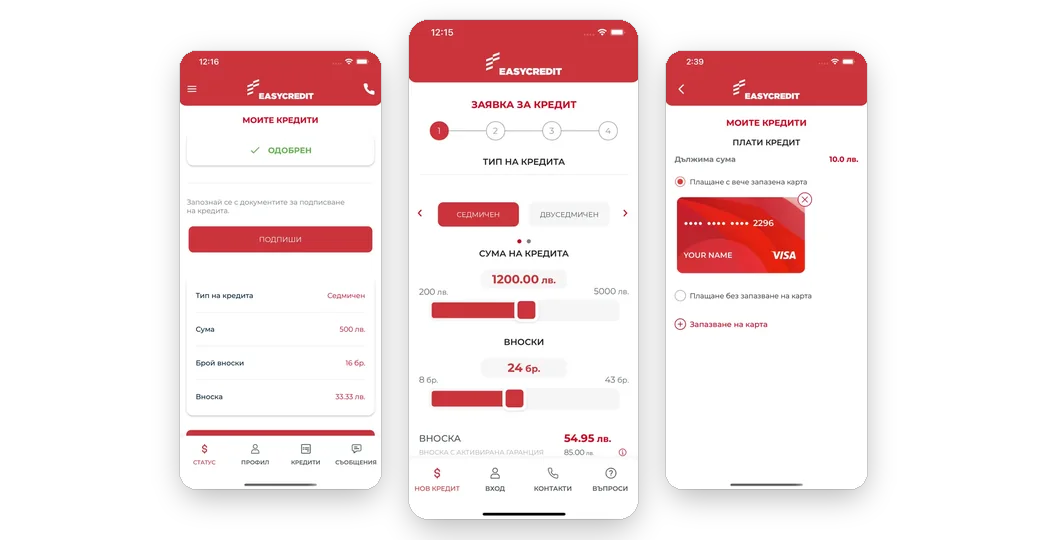

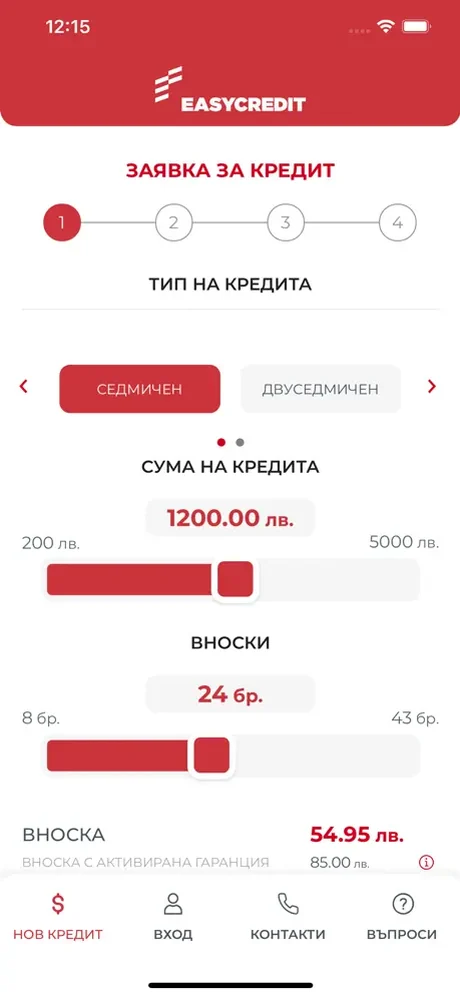
Easy Credit
Online consumer loans
The mobile app of Easy Asset Management AD, a company licensed by the Bulgarian National Bank. Customers choose an amount and a term, apply for a loan and come back to the app to check the status, sign the documents or pay an instalment.
What we built: Native iOS (Swift) and Android (Java) apps: applications for weekly, fortnightly or monthly loans, document signing, payment with a saved or new card, profile and notifications.
Connects to:
- Swift
- Java
- iOS
- Android
Kiwi Share
Electric car sharing
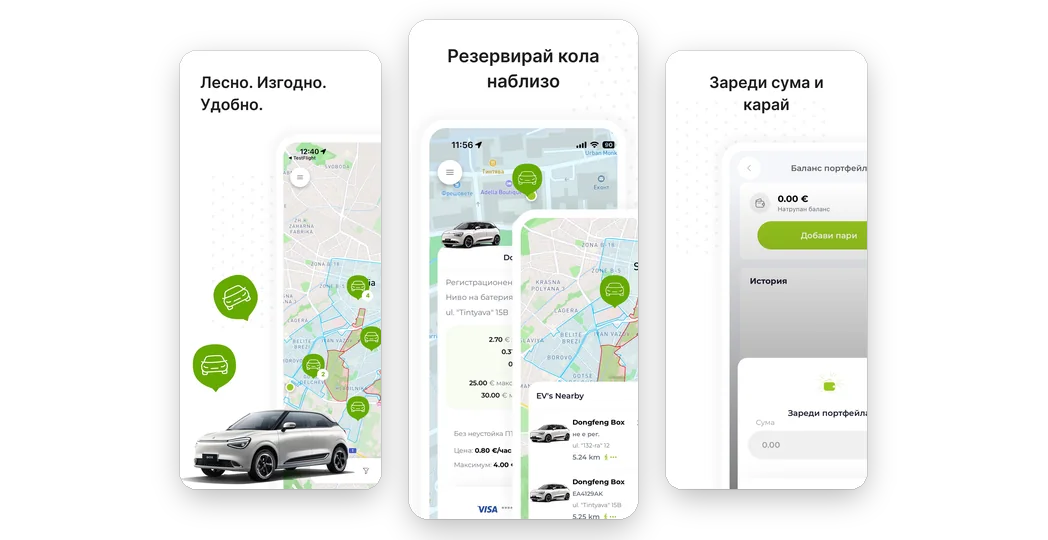
An electric car sharing service. Users find an available car on the map, check its battery level, reserve it on the way and unlock it from their phone. They pay for the minutes and kilometres they actually use, and the invoice is issued automatically.
What we built: An iOS and Android app: a map with charging stations, alerts when a car becomes free in a chosen area, wallet and promotions, referrals, trip history with routes and PDF invoices, and driving licence checks.
Connects to:
- React Native
- iOS
- Android

BlackRide Drivers
Internal app for chauffeurs
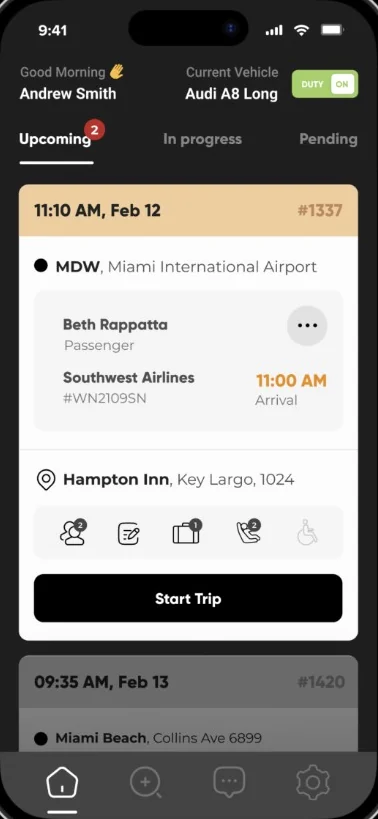
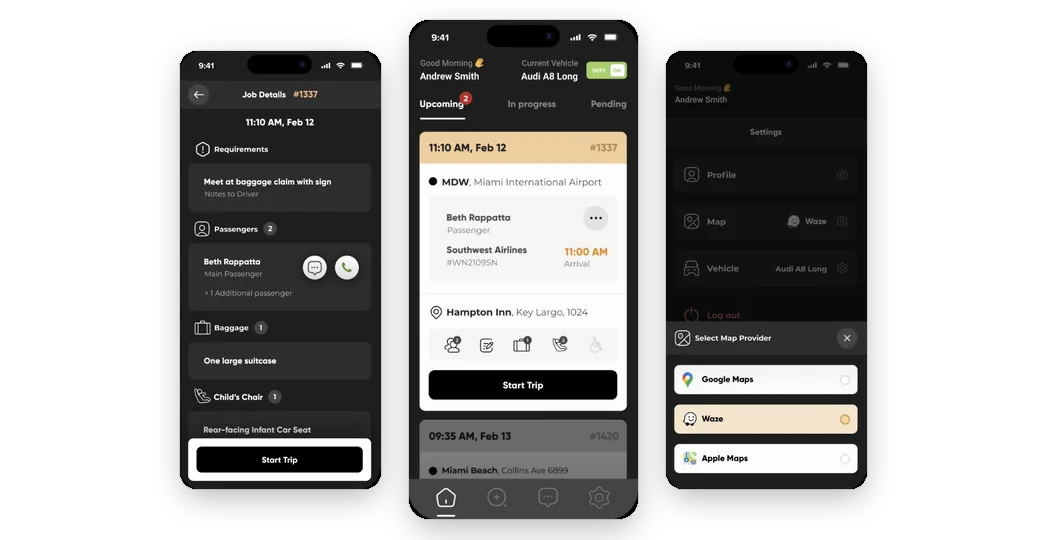
BlackRide has provided luxury chauffeured transport in Miami and Fort Lauderdale for more than 15 years, around the clock: airports, private terminals, cruise ports, corporate and long-distance rides. This is the app its chauffeurs use to receive and run their rides.
What we built: An iOS and Android app: shifts connected to dispatch, details for every ride (flight, passenger, luggage, child seat), calling and messaging passengers, switching vehicles and choosing a navigation app.
Connects to:
- React Native
- iOS
- Android

Shareascoot
Scooter sharing in Sofia
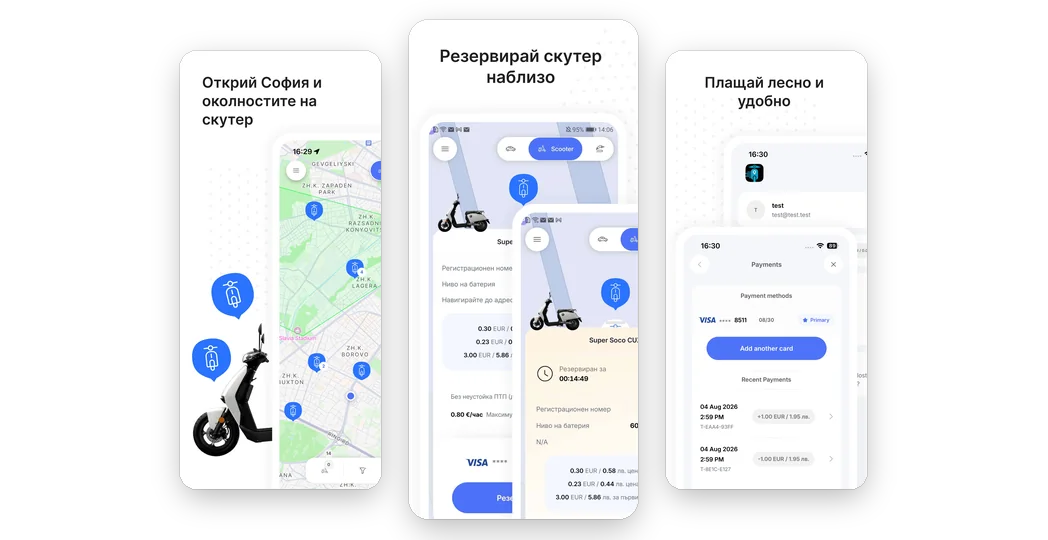
Rental scooters for short trips through Sofia traffic, from the team behind Kiwi. The app shows available scooters on a map, handles booking and charges by the minute, with no fuel costs and no hunting for parking.
What we built: An iOS and Android app with a new map, a shorter path to booking, a clear price breakdown, and the scooter's registration and insurance documents.
Connects to:
- React Native
- iOS
- Android
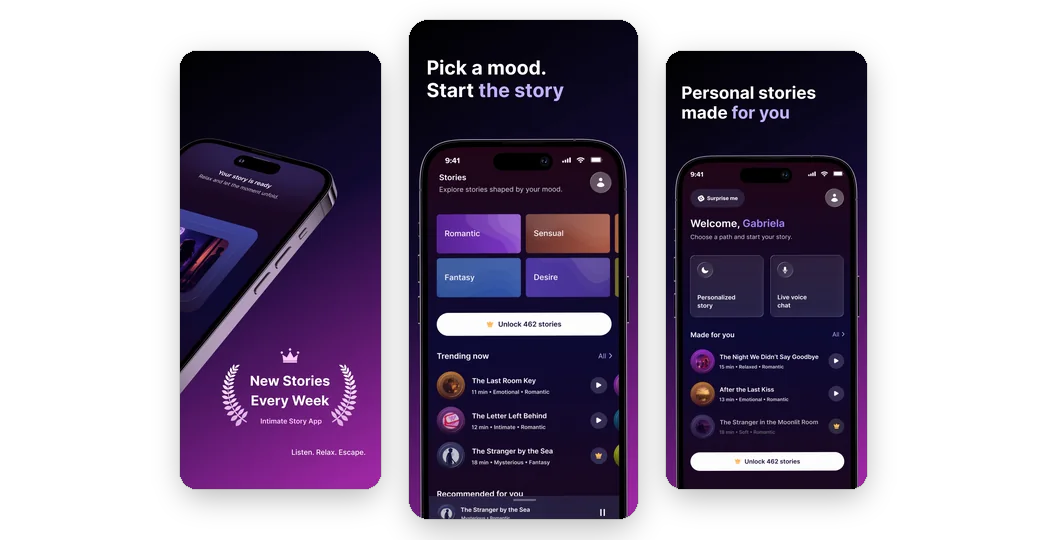

Femissimi
Personalised audio stories
Users choose a mood, a voice and a pace, and the app creates a story and plays it as audio. Stories can be read while listening, saved and changed, and a live voice chat is available. Subscriptions and minute packs are sold in the app.
What we built: An iOS and Android app: an audio player that shows the story text, mood, voice and pace selection, live voice chat, subscriptions and in-app purchases.
Connects to:
- React Native
- iOS
- Android
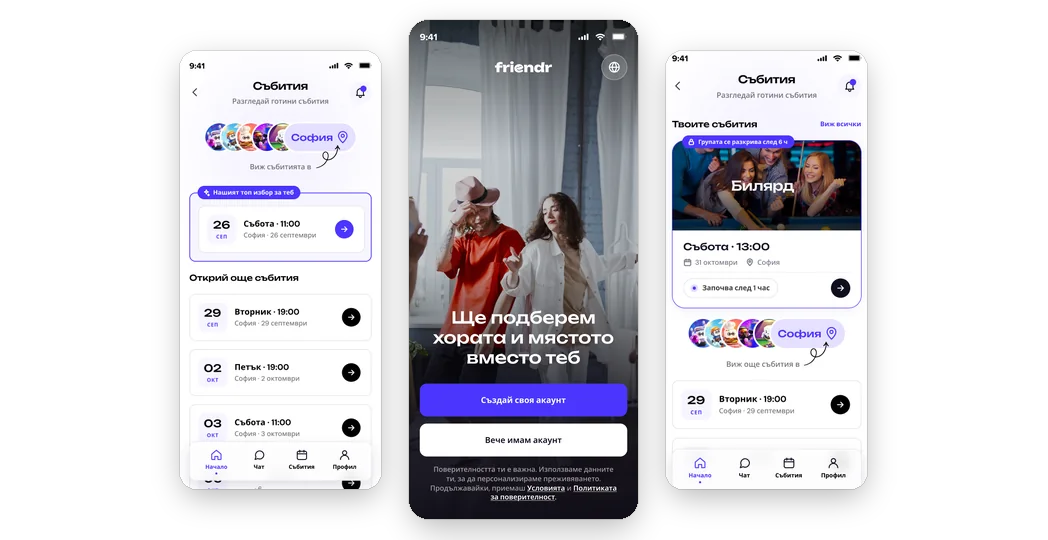

Friendr
Social app · beta
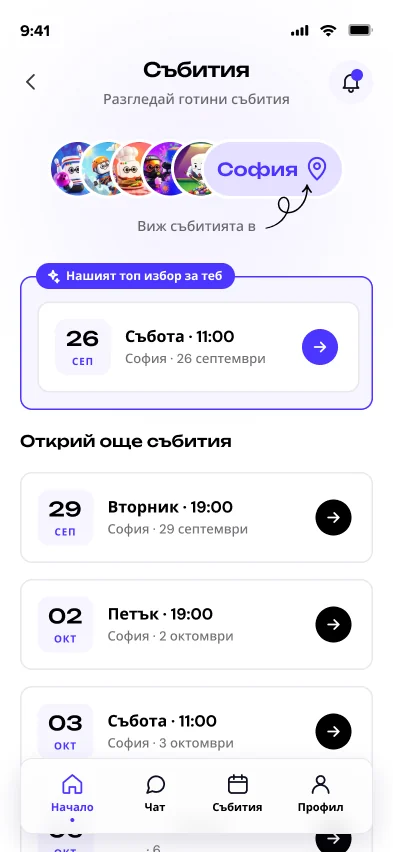
Friendr brings small groups of 5 to 7 people together around an activity in the city, with no swiping and no profiles to impress in advance. The place and the plan are revealed 24 hours ahead. The app is launching in Sofia.
What we built: An iOS and Android app: sign-up with a short questionnaire that shapes each group, events that stay locked until the reveal, and a group chat for every evening.
Connects to:
- React Native
- iOS
- Android
What kind of app does your business need?
We define features around your users’ tasks and the way your business operates.
-
Ecommerce and loyalty
Product catalogues, orders, customer accounts and personalised offers. Your app can use product information, pricing and stock data from your existing store or ERP.
-
Bookings and services
Appointment booking, reservation management, reminders and payments where appropriate. The goal is a clear path from choosing a service to confirming a booking.
-
Employees and field teams
Tasks, service reports, photos and status updates from the field. Where needed, we plan offline workflows and synchronisation when connectivity returns.
-
B2B customers and partners
Access to agreed pricing, orders, documents and fulfilment updates. Each user sees the information their role allows.
-
A first version of a new product
We identify the core capability you need to test your idea and separate launch requirements from features for later releases.
-
Don’t see your use case? Tell us how your business works.
Discuss your use case
What does mobile app development include?
The scope depends on your project. Our proposal identifies the components we will build, the systems we will reuse and the features planned for a later stage.
-
Discovery and specification
Users, core workflows, roles and priorities.
-
UX/UI design
User journeys, screens and a prototype for feedback. Mobile app design
-
Mobile development
The interface and features for your chosen platforms.
-
Backend and administration
Data, business logic and content management where required.
-
Integrations
Data exchange with your systems and third-party services. How we connect systems
-
Testing
Core journeys, access permissions, error handling and compatibility with agreed devices.
-
Launch preparation
Technical setup, distribution through the agreed channel and handover of the agreed documentation.
How much does a custom mobile app cost?
The cost depends on your core features, platforms, design and integrations. It also depends on whether you already have a working backend and API or need these built alongside the app.
-
An MVP with a core feature
For testing an idea with a focused initial scope. We define one core user journey and the features needed to make it work.
Budget: Estimated once the scope is defined.
-
A business app with an integration
For orders, bookings or employee workflows connected to an existing system. The estimate covers the mobile app and the required data exchange.
Budget: Estimated after reviewing the features and integration.
-
A product with complex workflows
For multiple user roles, several integrations, real-time features or offline workflows. We begin with a more detailed assessment of the dependencies.
Budget: A tailored estimate broken down by stage.
What should you budget for after launch?
Maintenance and updates, hosting and third-party services, publishing accounts and any transaction fees. Our proposal distinguishes one-off costs from ongoing expenses.
A mobile app connected to your business systems
When an app uses data from an ERP, CRM or online store, we define which system owns the information, what is exchanged and how often it is updated.
-
ERP and inventory
Products, stock levels, agreed pricing and orders. We define how changes are handled and what users see while information is waiting to synchronise.
Custom ERP development -
CRM and customer accounts
Customer details, requests, history and status updates, with access based on each user’s role.
Custom CRM development -
Ecommerce and third-party services
Catalogues, orders, shipping, payments and notifications, depending on the available APIs and the rules of each service.
Ecommerce development
An example B2B ordering workflow
- The customer signs in and sees their agreed prices.
- They place an order in the app.
- The system validates the data and records the order in the ERP.
- The customer receives an updated status in the app.
Native, cross-platform or PWA?
The right approach depends on your features, devices, budget and maintenance needs. We assess it against your product requirements.
| Approach | When we consider it | What we assess |
|---|---|---|
| Native | For platform-specific iOS or Android requirements and device capabilities. | The required platform features and the resources for development and maintenance. |
| Cross-platform | When iOS and Android share similar workflows and a shared codebase is suitable. | Support for the required integrations and any platform-specific work. |
| PWA or mobile web | When browser access can meet the core user needs. | Feature limitations on the target browsers and devices. |
If you already have an app, we start by reviewing its code and architecture. We then recommend whether to extend, modernise or replace it.
Technologies we use
- React Native One codebase for iOS and Android with a native interface. We built Kiwi Share, Shareascoot, Femissimi, Friendr and BlackRide Drivers with it.
- Swift Native iOS development where the product calls for it, as in the Easy Credit app.
- Kotlin and Java Native Android development. The Easy Credit Android app is written in Java.
How does the development process work?
-
Define the goal
We discuss your users, core workflow, existing systems and constraints. The outcome is an initial scope and priorities.
-
Design the structure and prototype
We map the screens and user journeys so you can provide feedback before development.
-
Plan delivery
We agree on milestones, dependencies, estimates and acceptance criteria.
-
Build and demonstrate
We develop features in stages and review progress with you.
-
Test and prepare for launch
We check the agreed journeys and devices, resolve issues and prepare distribution.
-
Plan future releases
After launch, we prioritise maintenance and improvements using feedback and actual usage.
What affects the timeline?
The scope, integrations, availability of content and access credentials, and the time needed for feedback. The schedule separates development from external reviews and app store approval.
What happens after your app goes live?
Before launch, we agree on responsibilities for the app, backend, hosting and third-party services. You know who to contact and which activities your support agreement covers.
- Resolving issues within the agreed scope.
- Planning updates when operating systems and software components change.
- Monitoring technical issues according to the selected service.
- Estimating and developing new features.
Response times, included hours and additional development are defined separately in the support proposal.
Software maintenanceA partner for your app and the systems behind it
The mobile interface is one part of the solution. It needs to work with your business data, rules and processes.
-
We start with how you work
We establish who will use the app, what they need to achieve and where time or information is currently being lost.
-
We plan the whole solution
We assess the mobile app, administration and integrations together so that dependencies are clear from the start.
-
We organise delivery into reviewable stages
We agree on the outcome and acceptance criteria for each stage. This helps you follow progress and plan the next decisions.
Certified information security
Our information security management system is certified to ISO/IEC 27001:2022 by Q-AID Europe (certificate No. QE/111/24) for the design, development, implementation and maintenance of software products. We have been certified since 2021.
Frequently asked questions
How much does an iOS and Android app cost?
The cost depends on the features, platforms, design and integrations. To prepare an initial estimate, we need to understand the core workflow, user roles and systems the app must connect to. Once the scope is defined, we provide an estimate by stage.
How long does mobile app development take?
The timeline depends on the scope, availability of designs and access, integration complexity and testing requirements. We prepare a schedule after the initial assessment. External reviews and app store approval are planned separately.
Do I need a technical specification?
No. You can start with a description of the problem, the intended users and the outcome you want. We will clarify the main workflows, integrations and priorities for the first release.
Can the app connect to my ERP, CRM or online store?
Yes, where a suitable interface is available or can be developed. Before estimating the work, we review the APIs, access permissions, data structure and any restrictions imposed by the system provider.
Can the app work offline?
Selected features can work offline if this is designed into the architecture. We define which data is stored on the device, how it synchronises and how conflicting changes are resolved. Offline support is a separate part of the scope.
Do I need an app if I already have a mobile website?
Not always. An app makes sense when it improves a recurring workflow or provides capabilities that your current website does not serve well. We compare the options based on usage, features and maintenance costs.
Who owns the code and app store accounts?
Ownership of the code and design, access rights and publishing accounts is agreed in the contract before work starts. Third-party components and services are identified separately because they have their own licences and terms.
Do you help with App Store and Google Play submission?
Technical preparation and submission support can be included in the project scope. We agree on the required accounts, materials and responsibilities. Final approval remains with the relevant app store.
What costs should I expect after launch?
Depending on the project, ongoing costs may include maintenance, hosting, third-party services, publishing accounts and transactions. New features are estimated separately unless they are included in the agreed plan.
Can you take over an existing app?
We start with a technical review of the code, technologies, infrastructure and available access. Based on the findings, we can propose a scope for maintenance, modernisation or a rebuild.
Tell us about your app
What process would you like to improve, and who will use the app? Describe your idea and we will get in touch to discuss the next steps.